Best Time to Go LIVE on TikTok: Analytics, Timing Tests, and Schedule
| Timing check | What to verify | Change the slot when |
|---|---|---|
| Audience activity | Followers tab, region mix, and the hour your followers are active. | The selected slot is convenient for you but quiet for the audience. |
| Benchmark window | Evening, midweek, or early-afternoon research windows are used only as starting points. | The article treats a third-party chart as a guarantee. |
| Warm-up period | The stream starts 30-60 minutes before the expected peak when the format needs ramp-up time. | The room starts cold at the exact peak and loses early momentum. |
| Quality signal | Retention, chat rate, follows, clicks, and repeat viewers are tracked with viewer count. | A bigger slot brings passive viewers but weaker engagement. |
What Are the General Best Times to Go Live on TikTok?
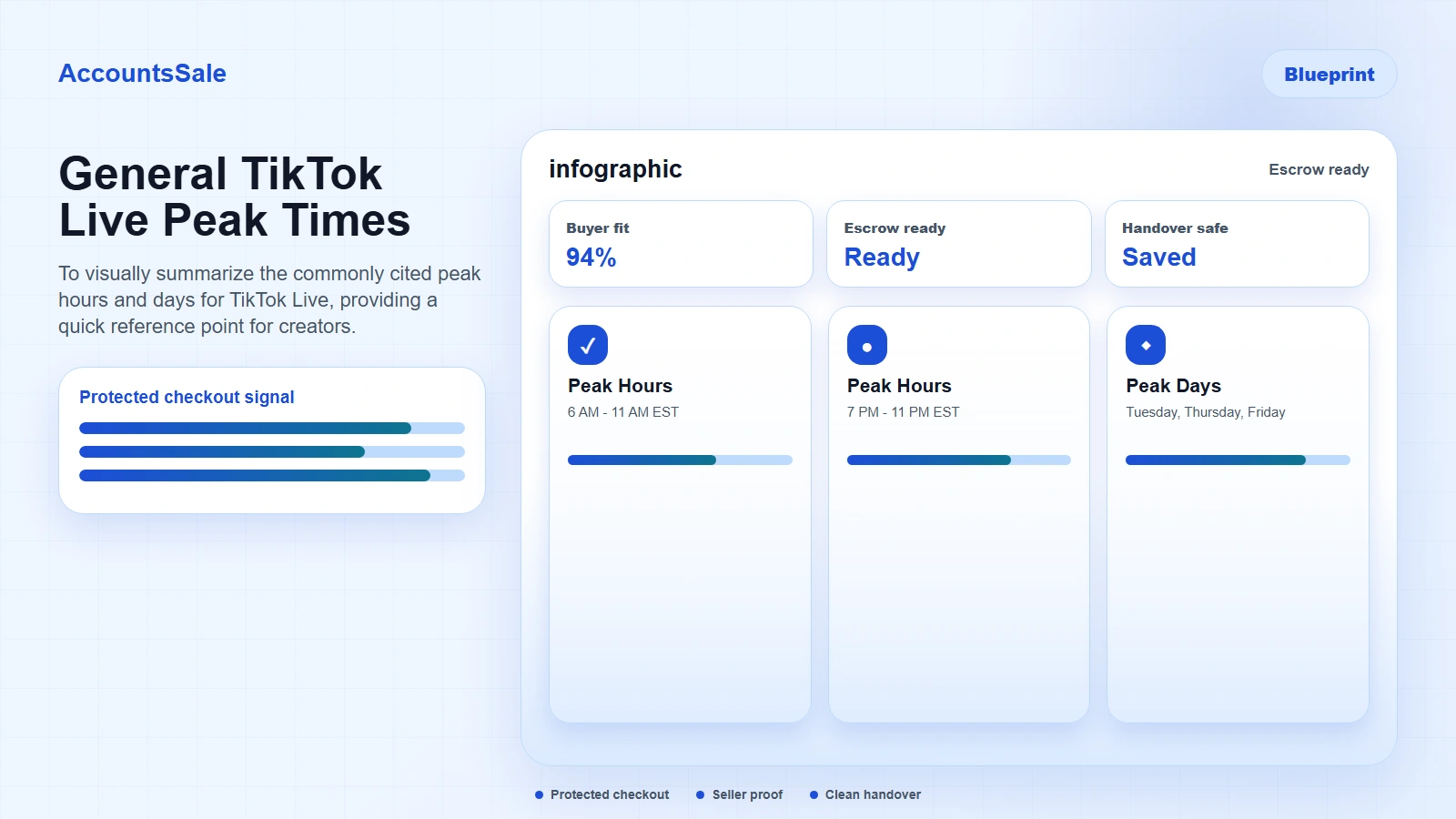
Across various studies, common peak hours for TikTok Live often fall between 6 AM to 11 AM and 7 PM to 11 PM EST. These windows frequently show higher user engagement, especially on weekday evenings and during early morning hours when people are commuting or preparing for their day. Tuesday, Thursday, and Friday are frequently mentioned as peak days, with Wednesday also performing strongly. These general patterns emerge because they align with widespread daily routines, offering users leisure moments to scroll through their feeds. For instance, the evening slot captures users unwinding after daily commitments, while early mornings coincide with people checking their phones before starting their day. For policy and scam-risk context, check TikTok’s Terms of Service, TikTok Community Guidelines, FTC guidance on avoiding online shopping scams. For the adjacent LIVE workflow, compare this timing plan with why you cannot go live on TikTok, TikTok LIVE earnings factors, TikTok LIVE subscriptions.
It’s important to remember that these are averages derived from large datasets and serve only as a starting point. Your specific audience might deviate significantly from these general trends, making personalized analysis essential for optimizing your live schedule. While these benchmarks offer a good initial guess, they don’t guarantee success for every creator.
Why Your TikTok Analytics Are the Ultimate Guide
Your TikTok analytics provide the most precise and actionable data for identifying your optimal live times, far surpassing any general guidelines. For creators and businesses, accessing the “Followers” tab within your TikTok analytics is the first step to understanding your audience’s behavior. This section offers detailed insights into when your followers are most active, broken down by hour and by day. By interpreting these activity graphs, you can pinpoint the exact times when your unique audience is most likely to be online and receptive to your content.
TikTok analytics also reveal regional data, showing where your audience is geographically distributed. This information is vital, especially if you have an international following, as it directly impacts time zone considerations. Understanding these insights allows you to move beyond generic recommendations and craft a live streaming schedule that directly aligns with your specific audience’s habits, ensuring you reach them when they are most engaged. This precision is invaluable for maximizing viewership and interaction. In practice, leading to better live stream performance.
How Global Creators Can Master TikTok Live Time Zones
Global creators face the unique challenge of engaging an audience spread across multiple time zones, requiring a strategic approach to live streaming. The first step involves thoroughly reviewing your TikTok analytics to identify your primary audience clusters by region. Once you understand the geographical distribution of your followers, you can model your live schedules to hit peak times in different regions. For example, a creator might opt for a “morning for Asia, evening for Americas” rotation, streaming twice a day to cater to distinct segments of their global audience.
This multi-stream approach, while demanding, can significantly expand your reach and engagement. To manage complex schedules, practical tools like world clock apps and scheduling platforms with built-in time zone conversion are invaluable. Some creators successfully implement a rotating schedule where they consistently stream at different local times each week, announcing the schedule in advance to allow followers to plan. Mastering time zones means understanding your audience’s global footprint and proactively adapting your live strategy to meet them where and when they are most active.
Does Your Niche Change the Best Time to Go Live on TikTok?
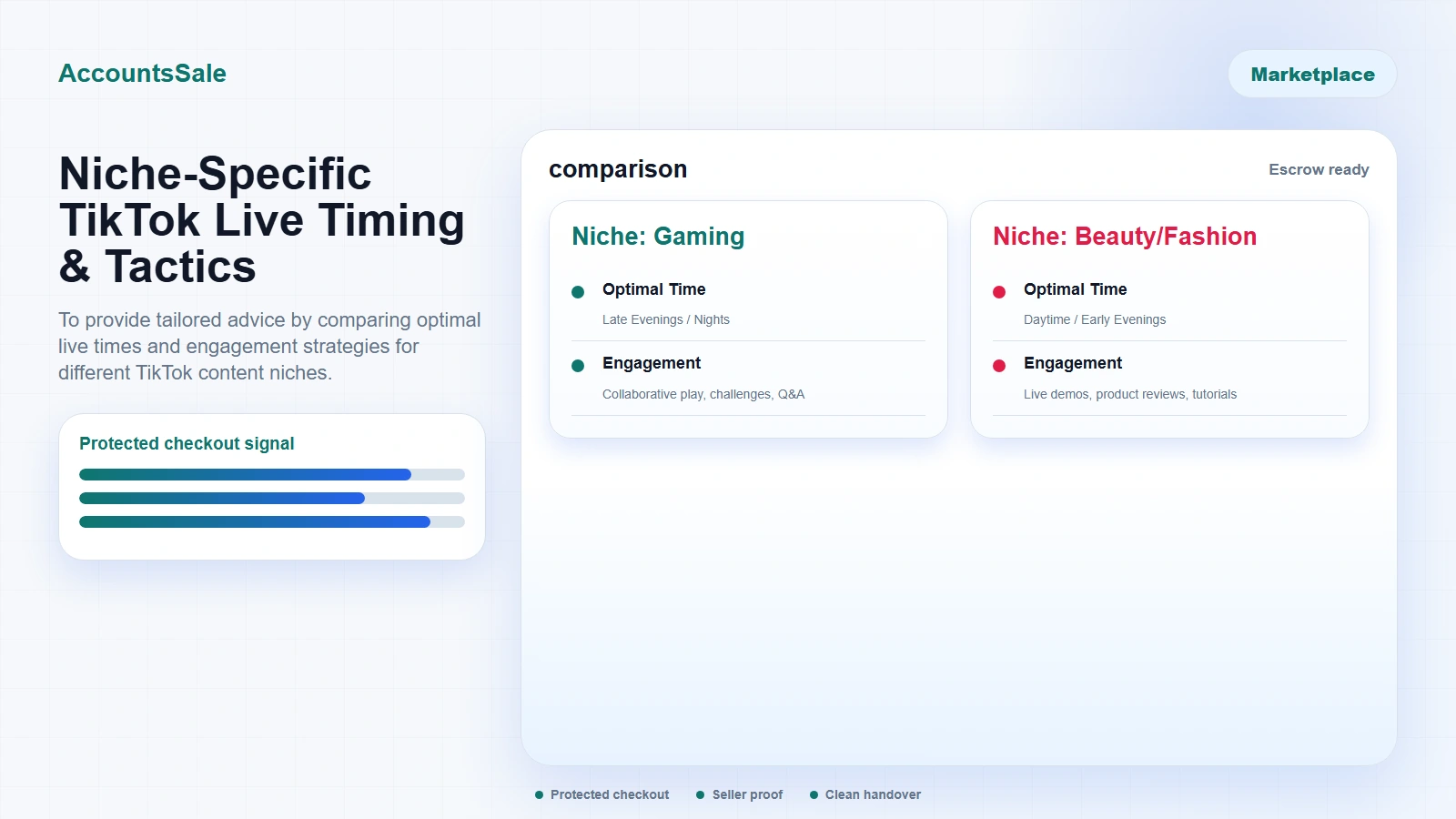
Absolutely, your specific niche profoundly influences the best time to go live on TikTok, as audience behavior varies significantly across different content categories. For instance, gaming creators often find peak engagement during late evenings and even late-night hours, as their audience, frequently younger demographics, is typically online after school or work, seeking entertainment and community. In contrast, beauty and fashion creators might see stronger performance during daytime hours or early evenings, when viewers are looking for tutorials, product reviews, or styling tips to incorporate into their daily routines.
Educational or coaching niches might attract viewers during lunch breaks or early mornings as people seek self-improvement content, while small business or e-commerce streams could thrive during typical shopping hours or after-work browsing periods. Understanding these niche-specific behavioral patterns allows creators to hypothesize optimal times that align with their content. A gaming stream, for example, might benefit from interactive challenges and collaborative play, whereas a beauty tutorial might focus on live demonstrations and Q&A sessions, each leveraging the audience’s natural engagement patterns at specific times.
How the TikTok Live Algorithm Really Works
Account age, level, followers, badge, email, phone, LIVE or Shop access, and policy status are listing claims—not guarantees. Verify every included control at handover. These attributes do not guarantee credibility, algorithmic placement, engagement, revenue, monetization, or permanent control, and TikTok may change eligibility or restrict an account at any time. AccountsSale does not independently guarantee account attributes. Escrow protects the transaction process; refunds or replacements are not automatic and depend on the order terms, evidence, and dispute decision.
Best Strategies for Promoting and Engaging During Your Live
Effective promotion and active engagement are critical for maximizing the impact of your TikTok Live sessions. Before going live, thorough preparation is essential, including planning your content, optimizing your streaming environment with good lighting and clear audio, and ensuring a stable internet connection. Promoting your upcoming live sessions in advance is equally important; use short-form videos, stories, and even posts on other social media platforms 48 to 72 hours prior to build anticipation and remind your followers.
During the live stream itself, active audience engagement is important. This work starts with consistently responding to comments, hosting Q&A sessions, giving shoutouts to active viewers, and leveraging TikTok’s interactive features such as Multi-Guest sessions and polls. These interactions foster a sense of community and keep viewers invested. The power of virtual gifts is also tied to genuine connection; viewers are more likely to send gifts when they feel a strong rapport with the creator. Captivating content and genuine interaction are key to keeping viewers engaged.
How to Consistently Go Live on TikTok Without Burnout
Balancing consistency with flexibility means establishing a general schedule but allowing for adjustments when necessary, especially when catering to diverse time zones. Knowing when to take breaks is important for mental well-being. Building a strong community can also empower your audience to support you, even when you’re not live, through active engagement in comments and shared content. This communal support can alleviate some of the pressure. Always verify broad timing ranges with your own follower activity data, stream dates, retention, chat rate, follows, clicks, and repeat viewers. This approach helps manage the demands of live content creation while fostering a sustainable and growing presence.
How Should You Test a LIVE Schedule?
Use a two-week test before trusting any single timing claim. Pick three or four candidate slots, keep the LIVE format similar, and record the same metrics after each stream: viewers, average watch time, chat rate, follows, clicks, gifts if relevant, and returning viewers. The winning slot is not always the largest room; it is the slot that gives the best mix of reachable audience and engaged audience.
Frequently Asked Questions
- What is the best time to go LIVE on TikTok?
- Start with the hours when your own followers are active. If you do not have enough analytics yet, test evening and midweek windows as benchmarks, then keep the slots that produce stronger retention, comments, follows, and repeat viewers.
- Should I copy a global best-time chart?
- No. Use global timing studies only as a starting point. Your audience time zone, niche, posting rhythm, and LIVE format matter more than a universal chart.
- How early should I start before a peak window?
- Start 30 to 60 minutes before the expected audience peak when possible. That gives the room time to warm up before the largest group of followers comes online.
- How many test streams do I need before choosing a schedule?
- Run at least two weeks of repeated tests across three or four slots. One strong or weak stream can be noise; repeated viewer and retention patterns are more useful.
- What should I measure besides viewer count?
- Track average watch time, chat rate, follows, product clicks if relevant, gift activity, replays, and whether the same viewers return. A smaller room with better retention can beat a larger but passive room.