How to Avoid TikTok Account Buying Scams in 2026
Key data points
- Americans lost about $2.1 billion to scams that started on social media in 2025, roughly eight times the 2020 total— Federal Trade Commission, April 2026
- Shopping scams were among the social-media scam patterns reported in 2025, including orders that were never delivered— Federal Trade Commission, April 2026
- Multi-factor authentication blocks more than 99.9% of automated account-takeover attempts— Microsoft Security, 2019
You found an account you want, the price is fair, and the only thing between you and owning it is a stranger you met an hour ago. That gap is where the money disappears. Knowing how to avoid a TikTok account buying scam is less about spotting a villain and more about refusing the handful of setups that let an ordinary-looking seller walk off with your payment.
The good news is that these cons are not creative. They reuse the same few moves, and once you can name them, most of them fall apart before you ever click pay.
The scams that hit account buyers look nothing like the TikTok scams in the news
Most articles about TikTok scams are about something else entirely. They cover fake giveaways, phishing DMs, romance bait, and impostors pretending to be TikTok support. Those are real problems, but they have nothing to do with the moment you actually try to buy an account from a stranger.
Buying an account is a private, one-off deal with someone you have no history with. That is exactly the gap a con artist wants. The Federal Trade Commission reported that Americans lost about $2.1 billion to scams that started on social media in 2025, roughly eight times the 2020 figure. A purchase you arrange in DMs or on a marketplace thread sits right in the middle of that trend, and no platform refund button is waiting for you when it goes wrong.
So the question is narrower than “are TikTok scams real.” It is this: when money and an account change hands between two strangers, what does the con actually look like, and how do you catch it before you pay.
What does a TikTok account buying scam actually look like?
There are only a handful of plays, and they repeat. Once you can name them, most of them fall apart on sight.
Take the money and vanish. You pay, the seller goes quiet, or hands over login details that stop working within the hour. Shopping scams include orders promoted through social media that are never delivered. An account sold in a DM is the same shape of deal.
The clawback. This one is built for accounts and it catches careful buyers. The seller delivers a real, working account. Days later it is gone, because they still had the original recovery email, phone number, or a verified ID on file and quietly pulled it back. A delivered account is not a transferred account until you have stripped out the seller’s access, and there are more reclaim routes than most buyers expect.
The dressed-up dud. The login works and the account is genuinely yours, but it is nothing like the listing. The followers are bought bots, the gifter badge level was faked in a screenshot, the “10k engaged audience” is dead air. You did not lose the account. You lost the value you paid for, which on a high-level account is most of the price.
The fake middleman. The seller suggests an “escrow” service or a “trusted middleman” and sends you the link or the payment handle. The service is theirs. Your money lands straight in their pocket while you believe it is being held safely. Real escrow is a service you find and verify yourself, with published release and dispute rules; a link the seller hands you is not that.
The off-platform sprint. Within two messages the seller wants to move to a private chat, wants payment in crypto or gift cards “to skip the fees,” and wants it now because “someone else is about to buy.” Urgency, an irreversible payment method, and a venue that keeps no record is the entire scam in one sentence.
Notice what runs through all five. Each one is an attempt to get the money to a point of no return before you can check anything. A scammer is not really selling you an account; they are selling you a few minutes of false confidence so the transfer happens in the wrong order. Flip the order, and the whole thing stops working.
It helps to know what the opposite looks like, because honest sellers behave in a recognizable way. They are fine with a payment hold. They will screen-share without being pushed. They answer specific questions instead of pivoting to “you can trust me,” they do not care which platform you stay on, and they are not bothered by you taking a day to check things. None of that proves the account is good on its own, but a seller who does all of it has removed the cheapest ways to rob you. Whether the account is worth its price is a separate question, and the guide to judging a purchased account’s value covers the follower, engagement, and niche checks for that.
The screenshot is the easiest thing in the world to fake
Almost every buyer asks for proof. Almost every buyer accepts the wrong kind. A static image of a follower count, an earnings page, or a gifter badge proves nothing at all. Editing one takes a few minutes and no skill, and a seller willing to take your money is willing to spend those minutes.
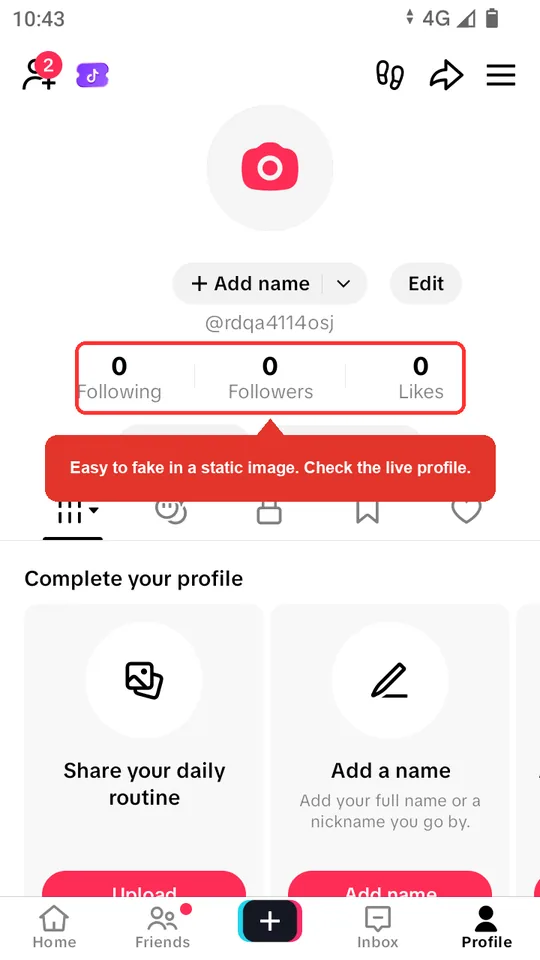
What proves something is a live action you control. Ask the seller to open the account on a screen-share or one unbroken screen recording, and to do something a finished image cannot show: scroll the gifter history, open the LIVE earnings page from the settings menu while you watch, tap into the analytics tab and change the date range in front of you. A recording that cuts at the wrong second, a flat refusal to screen-share, or a steady stream of polished images and nothing live is the answer. A price far below comparable listings deserves the same suspicion; you can compare an offer against current AccountsSale listing prices by level.
Cross-checking does the rest. A real account leaves public traces. The follower number on the profile should sit close to third-party estimates, the posting history should fit the audience size, and a high gifter level should line up with a visible history of sending gifts rather than sitting on an otherwise empty profile. When the private “proof” and the public profile disagree, believe the public profile. The same habits that catch a faked screenshot also catch a low-quality account, which is why running a verification pass before any money moves is time well spent.
Why won’t a chargeback save you?
A lot of safety advice ends at “use a payment method you can charge back.” It sounds reassuring, and for this kind of purchase it is mostly wrong — the safest way to pay for an account depends on whether the money is held during delivery and review, not on the rail itself.
Chargebacks were built for physical goods and obvious merchant fraud. A digital account handed over in a private deal is neither. The seller can show the platform that login details were delivered, disputes over “intangible” goods routinely fail, and the seller can pull the account back while your bank is still reviewing the claim. Crypto, wire transfer, and gift cards carry no chargeback at all by design, so sent outside escrow they leave you no recourse. The FTC is blunt about why: scammers ask to be paid that way precisely because the money cannot be clawed back once it is sent.
Real protection is not a reversal after the fact. It is keeping the money away from the seller while delivery and your checks happen. That is the job of an escrow-style hold: the payment is held, the seller delivers, and you have a fixed window to confirm the transfer is finished on your own device or open a dispute. On AccountsSale, that window is 72 hours after delivery; funds release when you confirm or automatically when the window ends without a dispute. If the account never arrives, you can cancel after 12 hours and the order refunds automatically at 48 hours; if it arrives broken, a dispute opened before release keeps the funds held while an administrator decides. Refunds go to your AccountsSale wallet balance, and wallet withdrawals are currently paused. How the order hold, review window, and release work is spelled out on the site. One caveat: on AccountsSale the platform operator, AccountsSale (Official), is also the seller of every current listing, so the hold is not run by a neutral third party — judge it by its written rules.
A short list that filters out most scammers before you pay
You do not need to memorize every trick. A few hard rules remove most of the risk.
Walk away if the seller refuses a live screen-share, insists on full payment first with no escrow holding it, wants crypto or gift cards sent directly to them, pushes you off the original platform, or invents a deadline. Each one on its own is a strong signal. Two of them together is your answer.
When a deal does go ahead, the danger is not over at payment. It is over when the account is locked to you and only you. The moment you have access, change the password, swap the recovery email and phone to ones only you control, and turn on two-factor authentication. Microsoft has reported that multi-factor authentication blocks more than 99.9% of automated account-takeover attempts, and here it pulls double duty: it also shuts the door on a seller trying to walk back in through old recovery details. The order you do this in matters, so nothing is left open behind you.
Picking a channel with a payment hold, a real ownership transfer, and written release, dispute, and refund rules removes most of these traps before they start. It does not remove every risk: a hold covers delivery and the review window, not a reclaim after release, and recovery coverage exists only when an order shows an active Recovery Guarantee. If you’re still weighing the broader question of what TikTok’s terms and the law say about transferring accounts — a platform-enforcement risk separate from the scam risk covered here — that’s where the full picture lives. And if you are the one selling rather than buying, the same traps run in reverse, so the seller’s playbook for staying safe is worth knowing too. No single check makes a stranger trustworthy. Stacked together, they make a scam slow and expensive, and scammers live on fast and final. Give them neither.
Frequently Asked Questions
- Is it a scam if the seller wants full payment before the transfer is complete?
- Not always, but it is the single biggest warning sign, and you should never agree to it without escrow holding the money. A seller who insists on full payment first, with nothing protecting you, is asking you to take all the risk while they take none. The safer version is a payment hold with written rules: the money is held, the seller delivers, and you check that the account answers to you before release. On AccountsSale, release happens when you confirm or automatically 72 hours after delivery unless you open a dispute first, and refunds go to your wallet balance. If the seller refuses any structure like that and wants the cash up front, treat it as a scam until proven otherwise.
- How can I tell if a follower or gifter screenshot is fake?
- You cannot tell from the image itself, which is the whole problem. A static screenshot of a follower count, earnings page, or gifter badge takes minutes to edit and proves nothing. Ask the seller to show it live instead: a screen-share or one unbroken screen recording where they scroll the gifter history, open the earnings page from settings, and change the analytics date range while you watch. Then cross-check the public profile, because a real account's follower count and posting history line up with third-party estimates. When the private proof and the public profile disagree, believe the public profile.
- What payment method is safest when buying a TikTok account?
- None on its own is safe, because the safety comes from how the payment is held, not which rail it runs on. Crypto, wire transfers, and gift cards have no chargeback at all, which is why scammers ask for them outside any escrow. Even a card payment can fail you, since disputes over intangible digital goods routinely lose. The real protection is a payment hold with written release and dispute rules, which keeps the money away from the seller during delivery and a review window. On AccountsSale (USDT TRC-20 only), an undelivered order refunds automatically at 48 hours, and a problem found after delivery must be disputed before the 72-hour window releases the funds.
- Can a seller take the account back after I have paid?
- Yes, if you left any door open. The seller can reset the account through an old recovery email or phone number, log back in through a linked Google or Facebook account, or file an ownership claim with TikTok using the account's creation history, which a password change does nothing about. This is why the handover is not finished at payment. It is finished when every recovery path is moved to you and enough time has passed without a claim. A payment hold does not cover a reclaim after release unless the order shows an active Recovery Guarantee, and no current AccountsSale listing offers one.